The 2027 Ford Explorer delivers 300 hp and a 13.2-inch touchscreen with native Google integration across five distinct trims. The Traverse answers with 328 hp and more raw cargo volume, making this a genuinely close call for three-row buyers. This page breaks down every key spec so you can decide, with Explorer inventory at Greg Hubler Ford.
The 2027 Explorer wins for buyers who want a tow-friendly rear-wheel-drive platform, a terrain-capable Tremor trim, and a wide choice of powertrains, including a twin-turbo V6 on ST and Platinum. The Traverse wins for buyers who prioritize raw cargo room (98 cu ft vs 85.8 cu ft) and a more powerful base engine (328 hp) on a front-drive-first architecture. Neither truck is the wrong answer. The right choice depends on what you actually do with the third row.
| Spec | 2027 Ford Explorer | 2027 Chevrolet Traverse |
|---|---|---|
| Engine (base) | 2.3L EcoBoost I-4 | 2.5L Turbo I-4 |
| Horsepower | 300 hp | 328 hp |
| Torque | 310 lb-ft | 326 lb-ft |
| Transmission | 10-speed automatic | 8-speed automatic |
| Base drivetrain | Rear-wheel drive | Front-wheel drive |
| AWD | Optional (standard on Tremor) | Optional on most trims |
| Seating | 7 | 7 |
| Cargo behind 3rd row | 16.3 cu ft | 22.9 cu ft |
| Max cargo | 85.8 cu ft | 98 cu ft |
| Towing | 5,300 lbs | 5,000 lbs |
| EPA combined MPG | 24 mpg | 22 mpg |
| Length | 198.7 in | 204.5 in |
| Ground clearance (base) | 7.6 in | 6.8 in |
| Basic warranty | 3 yr / 36k mi | 3 yr / 36k mi |
| Powertrain warranty | 5 yr / 60k mi | 5 yr / 60k mi |
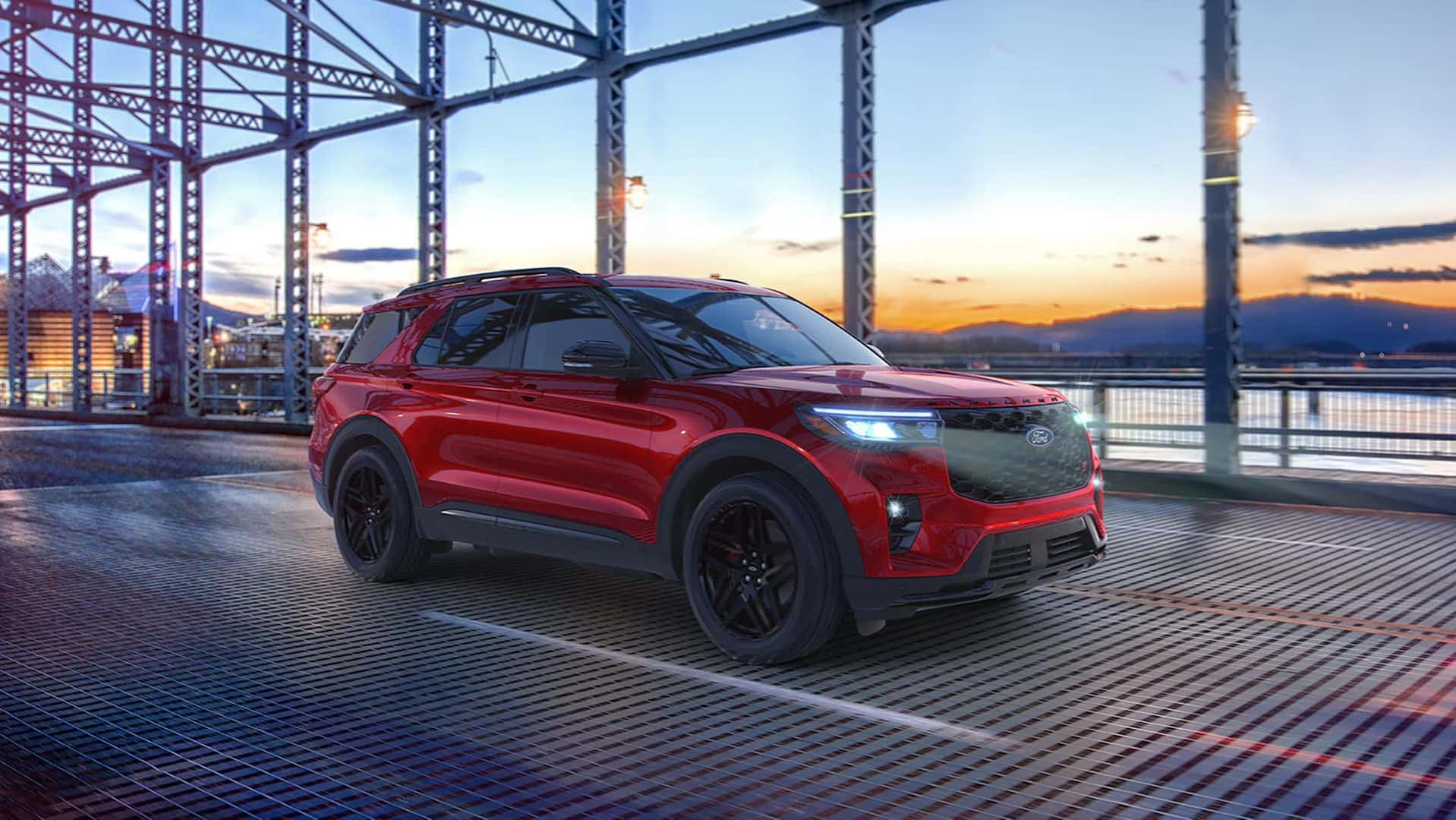
The Explorer’s 2.3L EcoBoost produces 300 hp and 310 lb-ft of torque through a 10-speed automatic, a gearbox that delivers finer ratio steps than the Traverse’s 8-speed at highway speeds. The bigger story is what sits above the base engine: buyers can upgrade to the 3.0L twin-turbo EcoBoost V6, available on Tremor and Platinum and standard on ST, for substantially more output.
The Traverse runs a single powertrain across all trims, the 2.5L turbocharged I-4 producing 328 hp and 326 lb-ft. On paper the Traverse wins the horsepower count at the base level. In practice, the Explorer’s rear-wheel-drive platform shifts weight rearward for a more balanced feel, while the Traverse leans on front-wheel drive as its default. Both tow, but the Explorer’s rated 5,300 lbs edges the Traverse’s 5,000-lb ceiling.
The Tremor trim adds 8.7 inches of ground clearance and standard intelligent 4WD, giving the Explorer a genuine off-road-ready option the Traverse cannot match.
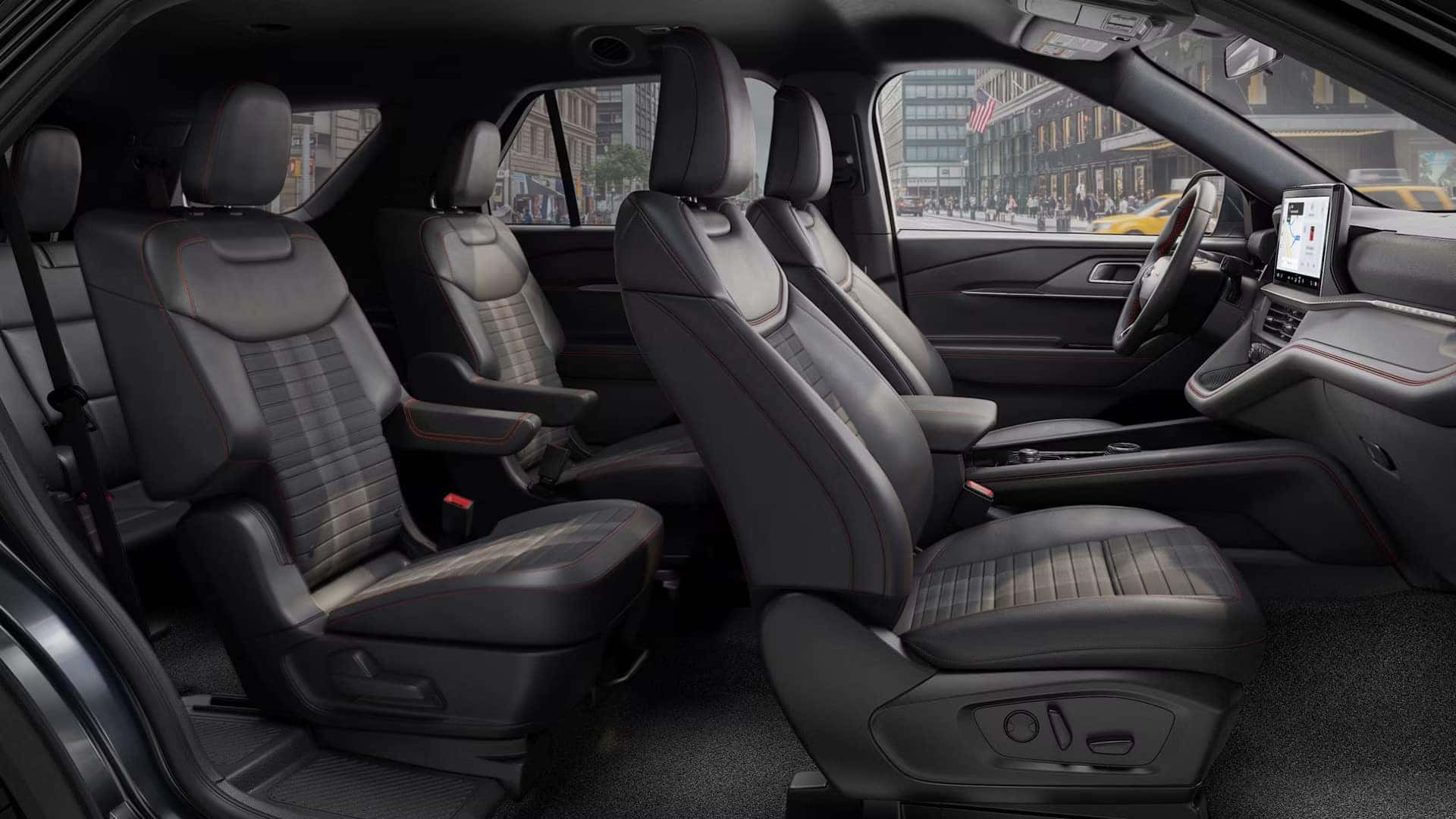
On raw numbers, the Traverse is roomier behind both the third and second rows. Its 22.9 cu ft behind the third row beats the Explorer’s 16.3 cu ft meaningfully, and 98 cu ft of maximum cargo dwarfs the Explorer’s 85.8 cu ft. Families who frequently haul gear with all seven seats occupied will feel the difference.
The Explorer counters with useful interior dimensions of its own. First-row legroom stretches to 43 inches and first-row headroom reaches 40.7 inches. Second-row legroom comes in at 37.5 inches and third-row legroom measures 31.8 inches. The Traverse stretches 204.5 inches overall (vs the Explorer’s 198.7 inches), which explains much of the cargo advantage.
Both vehicles seat seven passengers. The Traverse offers an optional eight-passenger configuration on LT AWD, while the Explorer’s Tremor is configured for six due to its second-row captain’s chairs.
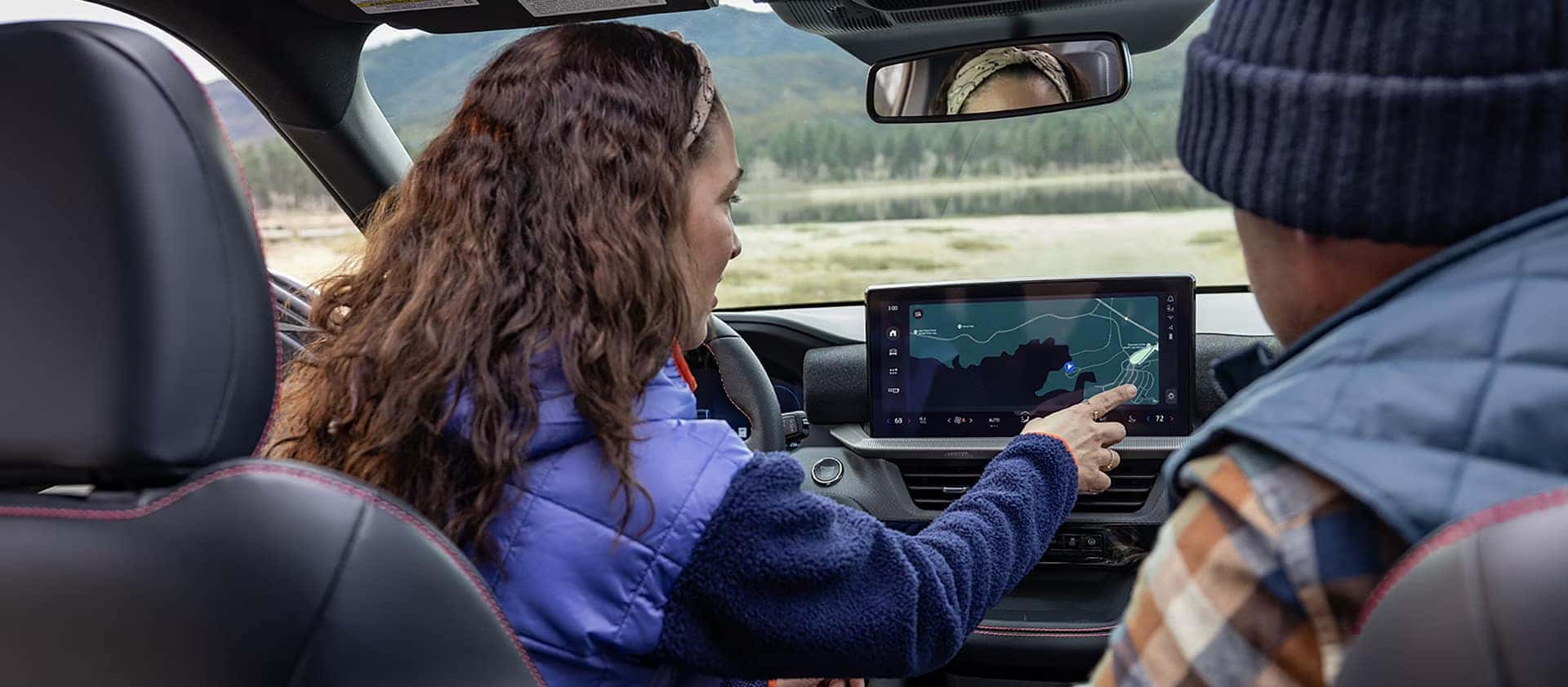
Both vehicles run Google-native infotainment. The Explorer pairs a 13.2-inch center touchscreen with a 12.3-inch digital cluster, Google Maps, Google Assistant voice controls, and a 5G modem. The Traverse runs a larger 17.7-inch touchscreen with its own Google Built-In suite (Google Maps, Google Play, Google Gemini) and an 11-inch driver information center. The Traverse’s screen is physically bigger. The Explorer’s screen aspect ratio and instrument cluster combination produces a more symmetrical dual-screen cockpit.
Wireless Apple CarPlay and Android Auto are standard on both. The Explorer adds a Wi-Fi hotspot supporting up to 10 devices at up to 50 feet, plus the Ford Connectivity Package covering streaming, karaoke, and parked-vehicle games for the first year. The Traverse offers available Super Cruise hands-free driver assistance, a technology the Explorer does not currently match through Ford’s suite.
On safety, the Explorer includes Ford Co-Pilot360 Technology, adaptive cruise control, and a 360-degree camera as standard. The Traverse carries forward collision warning with automatic emergency braking, blind-spot warning with rear cross-traffic alert, and a 360-degree camera system. Both lineups are well-equipped at their respective entry points.
2027 Explorer safety features and Co-Pilot360 details
Audio options differ. The Explorer offers a B&O Sound System by Bang and Olufsen, upgradeable from 10 speakers to a 14-speaker 980W configuration. The Traverse offers an available Bose premium audio system.
Both vehicles carry identical basic and powertrain warranty terms: 3 years / 36,000 miles for bumper-to-bumper and 5 years / 60,000 miles for the powertrain. Neither has an advantage in written warranty coverage.
The Explorer achieves 24 mpg combined (20 city / 27 hwy) on the 2.3L EcoBoost using premium fuel. The Traverse returns 22 mpg combined on the FWD versions (20 city / 26 hwy per verified data) using regular unleaded. That 2-mpg gap favors the Explorer over tens of thousands of miles, though the Traverse’s acceptance of regular fuel partially offsets the difference at the pump.
The Explorer’s five trim levels, Active, ST-Line, Tremor, ST, and Platinum, give buyers a wide band of choice from a sport-utility entry to a twin-turbo performance SUV. The Traverse spreads across seven trim designations but runs a single powertrain throughout.
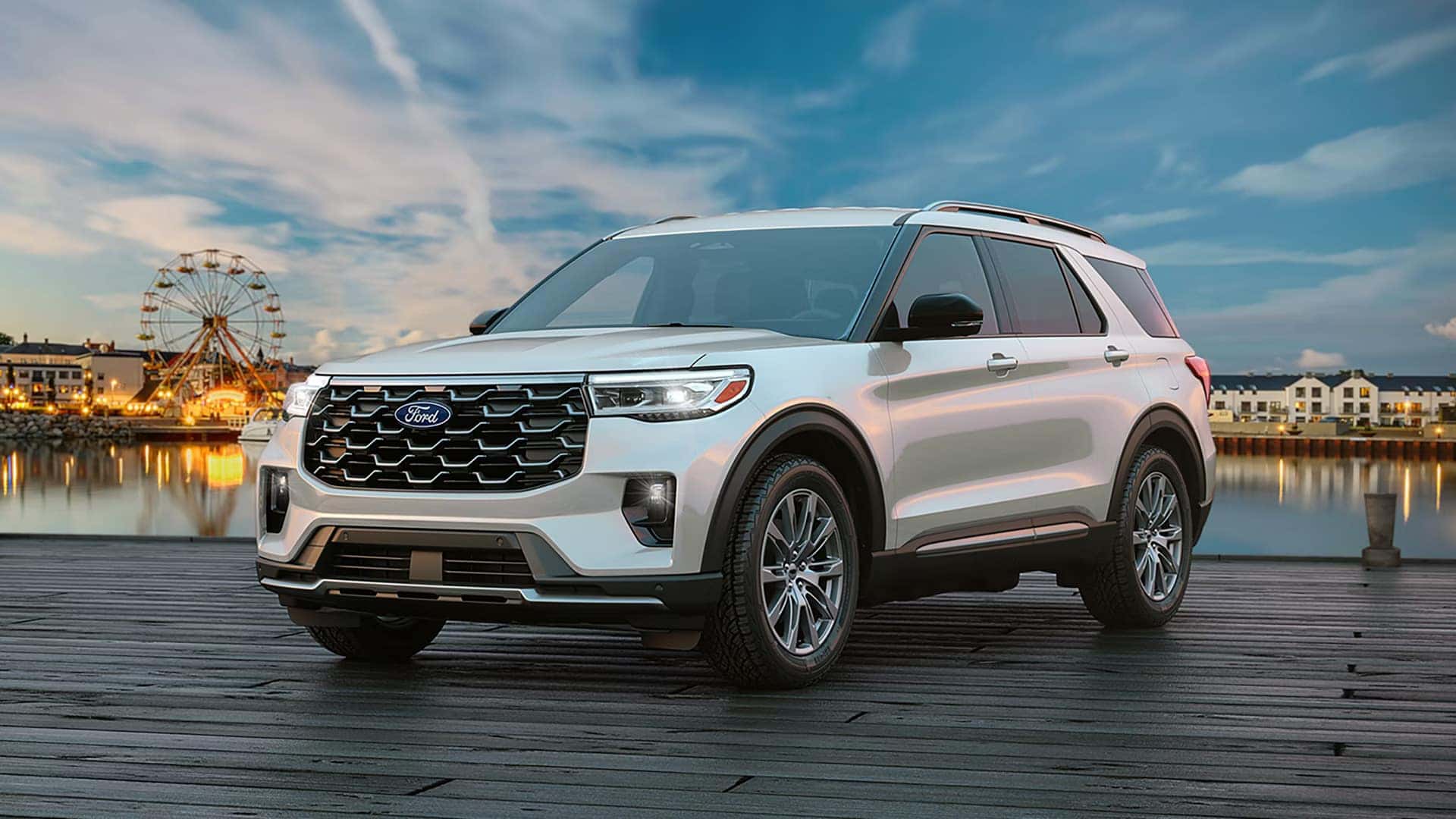
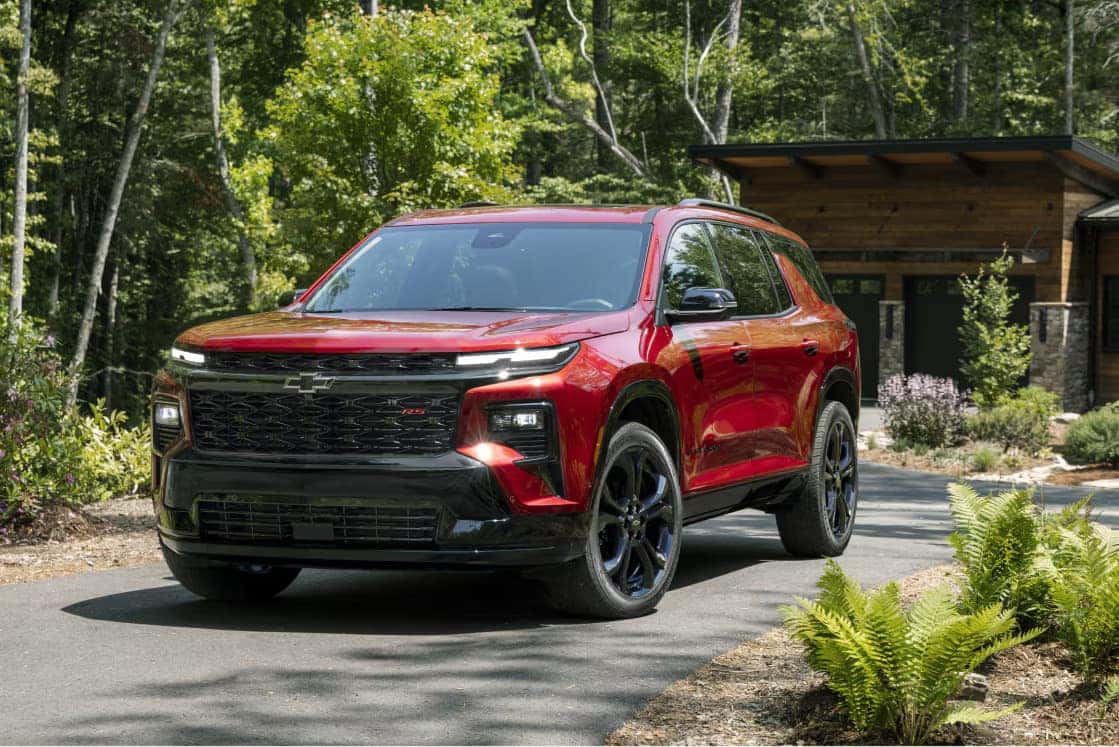
For Muncie-area families comparing these two in person, the Explorer’s driving character and capability range make it the more versatile three-row. The Traverse is the better choice if loading the back matters more than what happens under the hood.
Greg Hubler Ford carries the 2027 Explorer across all trims. Seeing the 13.2-inch cockpit, sitting in the third row, and feeling the EcoBoost powertrain off the line is the fastest way to settle this comparison. Check current Explorer inventory, value your trade online, or schedule a test drive with the team in Muncie.
The Traverse has more cargo space. It offers 22.9 cu ft behind the third row and 98 cu ft maximum, compared to 16.3 cu ft behind the third row and 85.8 cu ft maximum in the Explorer.
The Explorer returns better fuel economy. It achieves 24 mpg combined (20 city / 27 hwy) versus the Traverse’s 22 mpg combined on FWD versions. Note that the Explorer requires premium fuel while the Traverse accepts regular unleaded.
The Explorer tows more, rated at 5,300 lbs versus the Traverse’s 5,000 lbs.
Yes. AWD is optional on most Explorer trims and standard on the Tremor. The Tremor also adds standard intelligent 4WD and 8.7 inches of ground clearance for off-road use.
At the base level, the Traverse produces more horsepower: 328 hp versus the Explorer’s 300 hp. However, the Explorer’s optional 3.0L twin-turbo V6 on the ST delivers significantly more output than any Traverse powertrain.
Yes. Greg Hubler Ford in Muncie carries the 2027 Explorer lineup. Use the inventory link above to check current stock or schedule a visit.