Evaluating Commercial Capability
The Dual Rear Wheel configuration adds two extra tires for maximum lateral towing stability. This wider physical footprint significantly reduces trailer sway when hauling massive goosenecks across Indiana highways. Compare these specific structural differences below before browsing our available commercial truck inventory.
When selecting a heavy-duty truck for your business, the physical dimensions of the vehicle dictate where you can operate. The F-350 single rear wheel (SRW) configuration utilizes a standard truck bed design. Because the rear track width matches the front, this setup remains highly maneuverable in tight urban environments. It allows Muncie drivers to easily navigate narrow construction sites, fit through standard bank drive-through lanes, and park in traditional commercial parking lots.
Conversely, the Dual Rear Wheel (DRW), commonly known as a dually, requires heavily pronounced rear fenders to house the four rear tires. This extra width creates a massive visual and physical footprint. While this limits agility in tight city spaces, it is an absolute necessity for operators who spend the majority of their time on the open highway pulling oversized loads. To explore how these distinct body styles pair with the available trim levels, read our comprehensive 2026 Ford Super Duty overview at Greg Hubler Ford.
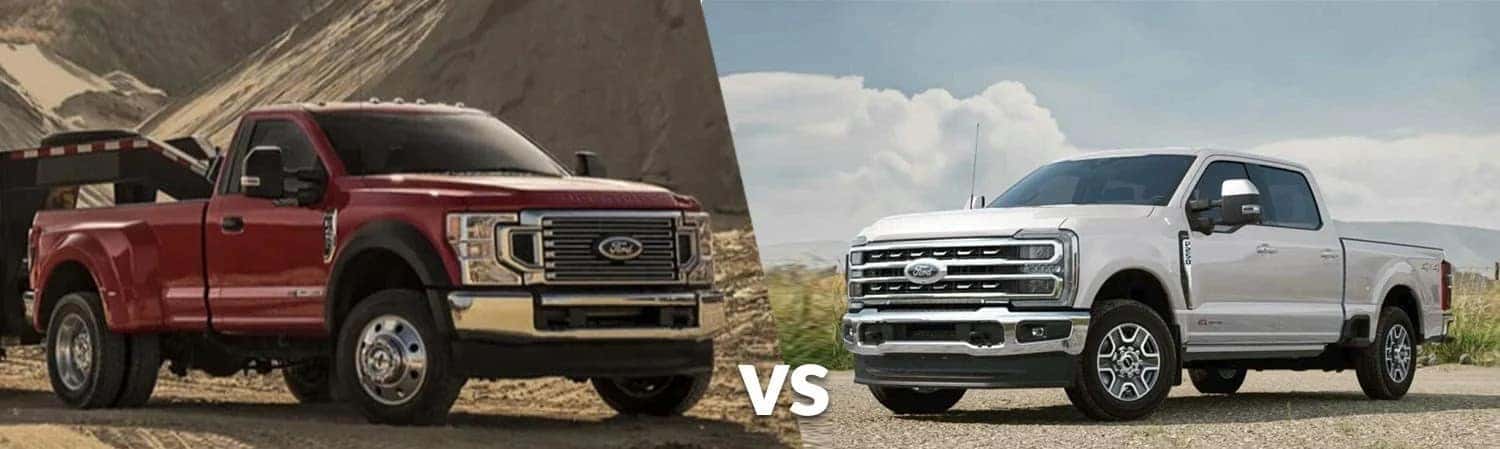
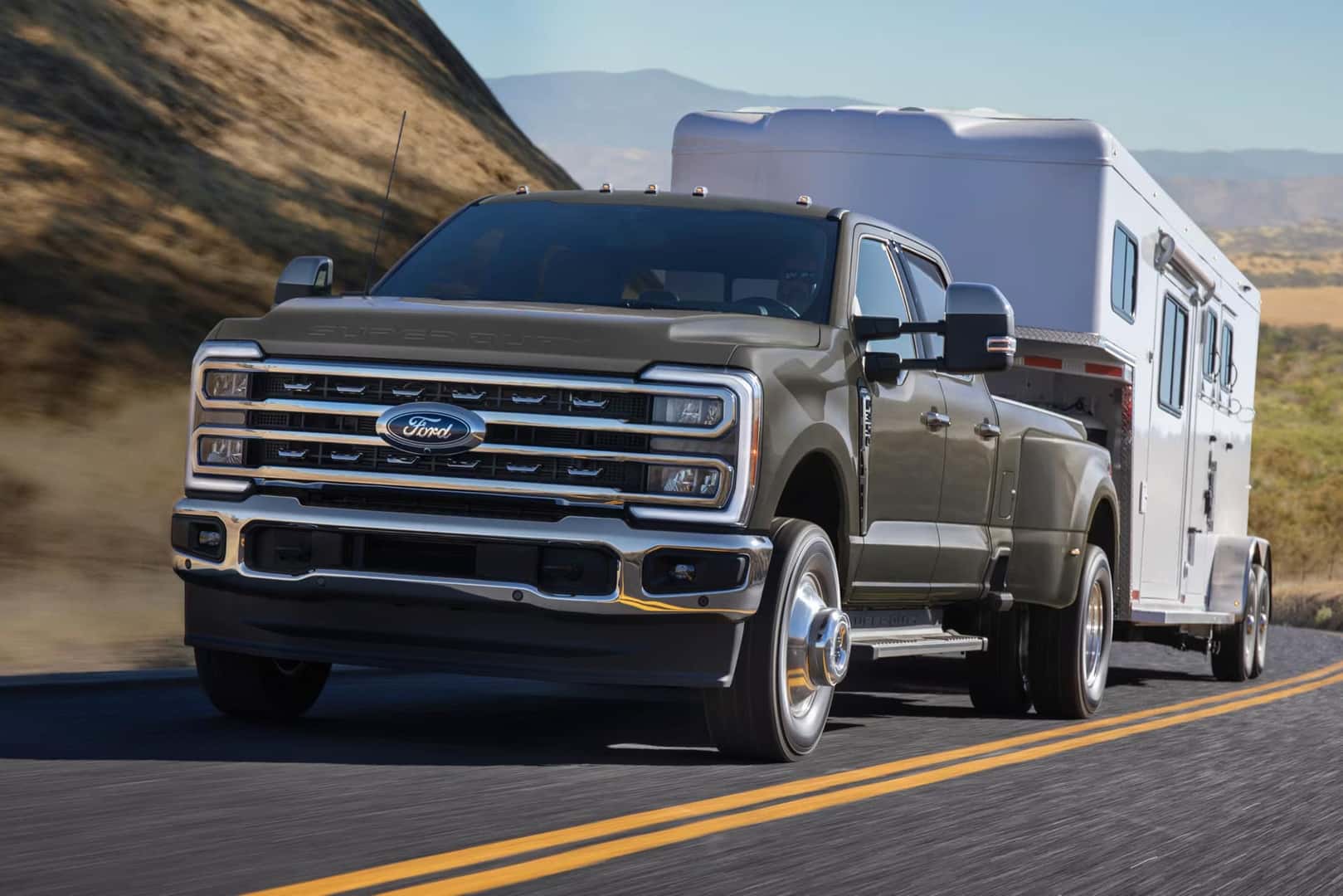
The primary reason commercial buyers upgrade to a DRW configuration is to maximize control over a heavy trailer. Spreading the tongue weight across four rear tires instead of two drastically improves the vehicle’s center of gravity.
When crosswinds hit a large 5th-wheel camper or a multi-horse trailer on I-69, the extra tires act as anchors, preventing the trailer from aggressively pushing the rear of the truck sideways.
| Feature Category | F-350 Single Rear Wheel (SRW) | F-350 Dual Rear Wheel (DRW) |
|---|---|---|
| Rear Tire Count | Two standard tires | Four tires with expanded fenders |
| Primary Advantage | Better turning radius and urban parking agility | Maximum highway stability and crosswind resistance |
| Best Suited For | Agricultural supervisors and utility contractors | Specialized hotshot haulers and heavy RV towing |
Both configurations share the same high-strength steel frame and advanced powertrain options. However, the dually unlocks the highest possible axle weight ratings. You can review the exact structural axle limits and commercial payload requirements directly on the official Ford commercial fleet network.
Your daily routing should determine your final choice. If your crew frequently drives into downtown Muncie or navigates densely populated residential neighborhoods for landscaping projects, the SRW provides the perfect blend of extreme power and practical agility.
If your business involves hauling heavy construction equipment between distant cities, the unmatched F-350 dually towing stability is non-negotiable. It provides a level of driver confidence and safety that a single-wheel axle simply cannot match. For further details regarding federal safety guidelines for commercial hauling, you can consult the official FMCSA transportation database.